
Introducing ‘Better Call Sophia’: A quick dip into legal issues affecting museums
This is the first of a series of columns exploring the intersection of law and art.
I am not a lawyer. I am not your lawyer. This is not legal advice.
After virtually attending the Legal Issues in Museum Administration Conference (cosponsored by the Smithsonian) at the end of April, I became fascinated by the legal side of the museum and art world. As a layperson (I am not a lawyer! I am not your lawyer and this is not legal advice!), it was eye-opening to learn that the backbone for so much of our work—provenance research, contracts for loans, commissioning or purchasing new objects for the collection, using our logo—relies on the expertise of our Office of the General Counsel.
As a communications person, I wanted to continue exploring art and legal history, developments in the field, and of course, sharing my findings with you. If you are interested in learning more, look for “Better Call Sophia” on Torch every other Friday (I won’t really be billing you!) I’ll take you on a lay person’s tour of the world of art law conducted in plain English since I don’t speak legalese. Just remember, this is an introduction to the field–consult a real expert if you need specific help!
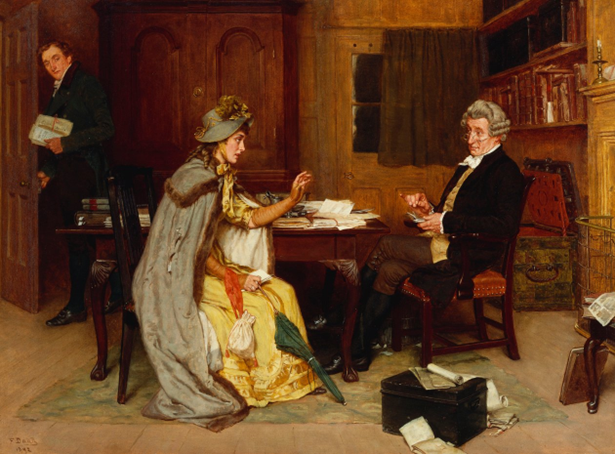
“Consulting her Lawyer” Frank Dodd, 1892
The kids are (copy)right
Among the events in the Family Activities tent at this year’s Smithsonian Folklife Festival, “Youth and the Future of Culture,” was a puppet show hosted the U.S. Copyright Office designed to explain copyright to young learners.
Although copyright may not immediately seem like a fun, for-all-ages topic, there is no minimum age requirement for being able to claim copyright. So minors, of even the youngest ages, can copyright their original drawings or other works.
In fact, copyright is automatic for anything someone creates that is original, creative and in a fixed form, but registering with the U.S. Copyright Office provides distinct benefits. By creating a public record of the work, the creator obtains rights to reproduce and distribute copies and the ability to bring infringement actions to court.
Generally, copyright lasts from the date of creation until the end of the author’s life plus seventy years. So, a young artist—maybe even one of the kids sitting in the crowd at the festival—could enjoy the benefits of copyright for many years, including a piggy bank that grows heavier over time from charging licensing fees.
So, don’t throw the kids’ finger paintings or original stories away just yet. Instead, embrace the legal guidance of some empowering puppets and encourage the young creators around you to take copyright seriously.
Learn more
Interested in learning more about copywriting your own original work? The U.S. Copyright Office has full instructions.
(And, for the curious: no, AI art cannot be copyrighted, for now at least. The Thaler v. U.S. Copyright Office ruling did not grant copyright to computer-generated works because they lacked human authorship.)
Posted: 5 September 2025
- Categories:


This is the only column I follow on Torch because it’s THAT good!!!!!!!!!